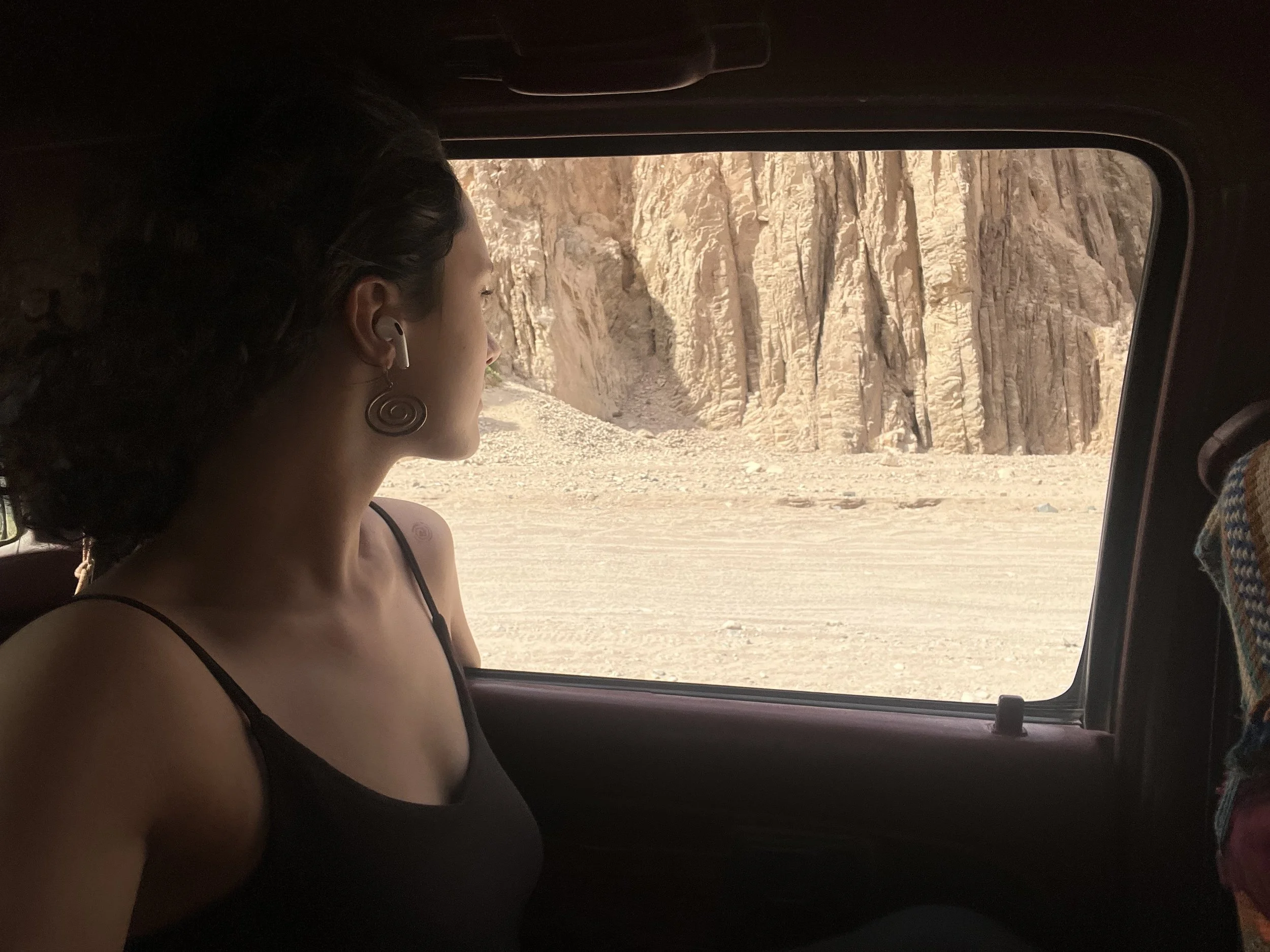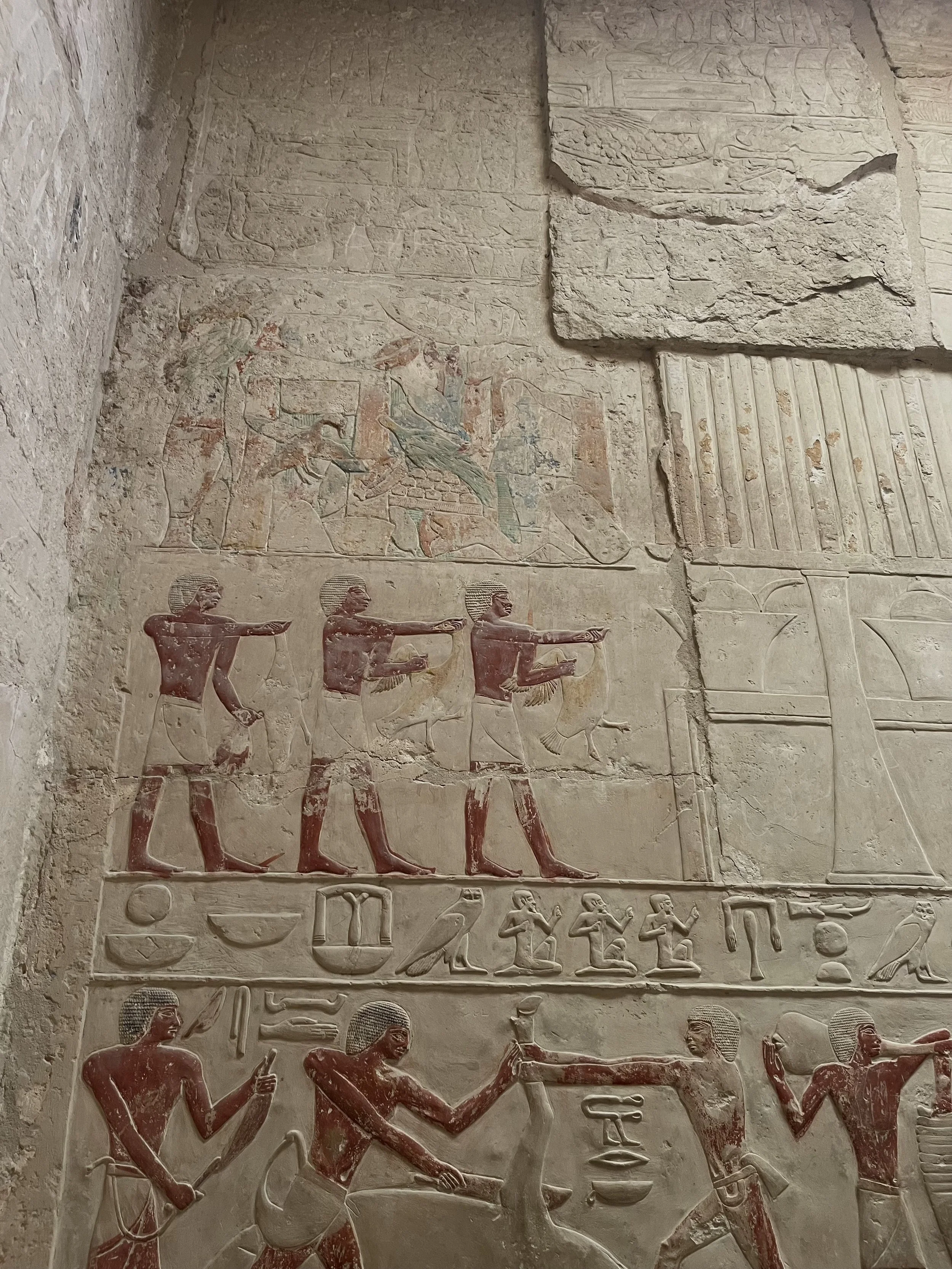
The Labyrinth is one of the oldest and most enduring symbols; It can tell us about identity, ancestry and the ways we understand ourselves.
In collaboration with Mandala Theatre company, Heart lab 2026.
Exploring diasporic identity, decolonisation and ancestral connection. Through research into ancient Egyptian civilisation, belief systems, Kemet and mythology, we're exploring how ancient beliefs and practices can speak to contemporary British diasporic identities.
Learning about native lands, traditions, practices, ceremony and understanding the histories and knowledge systems that inform them.
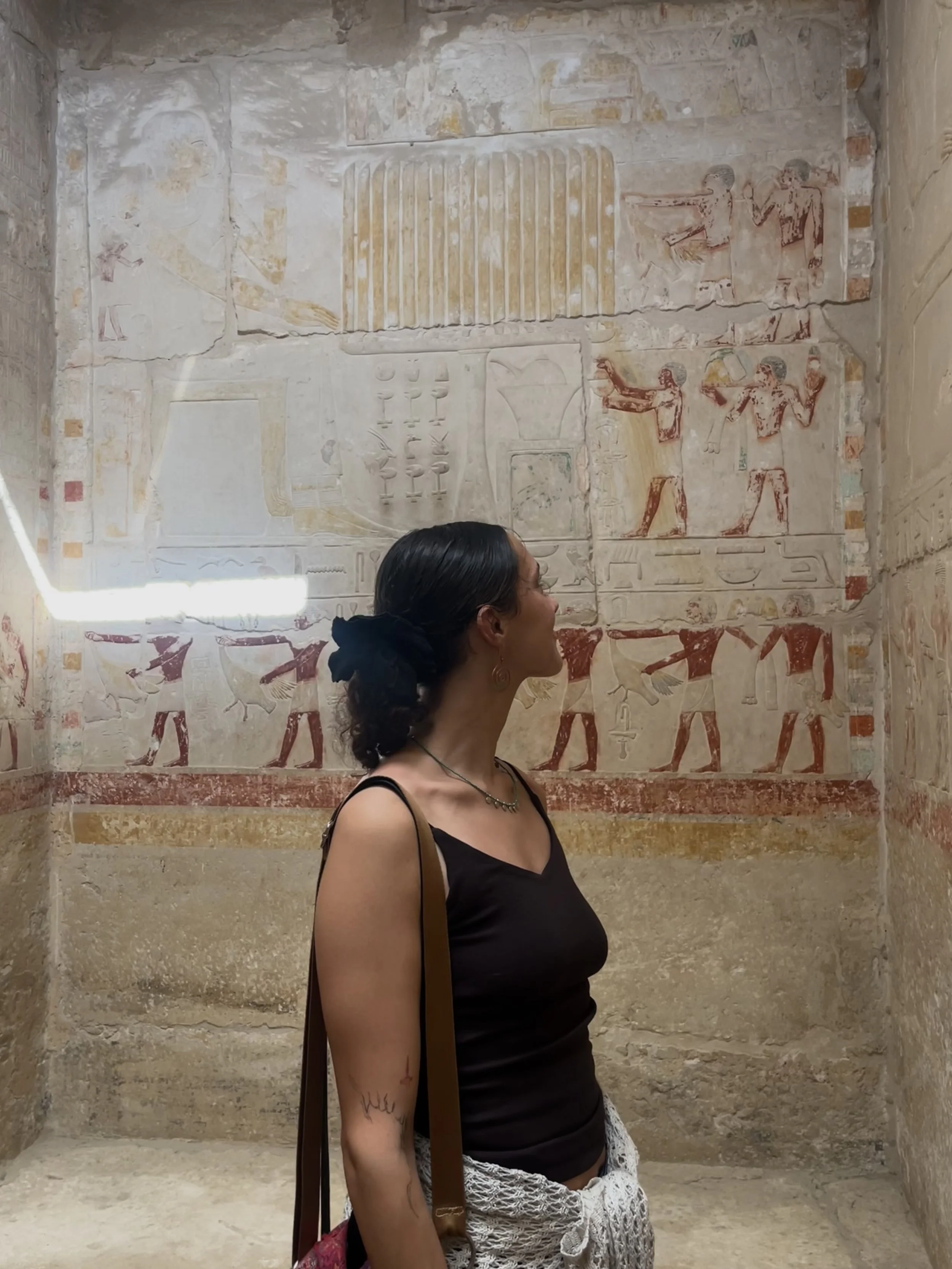
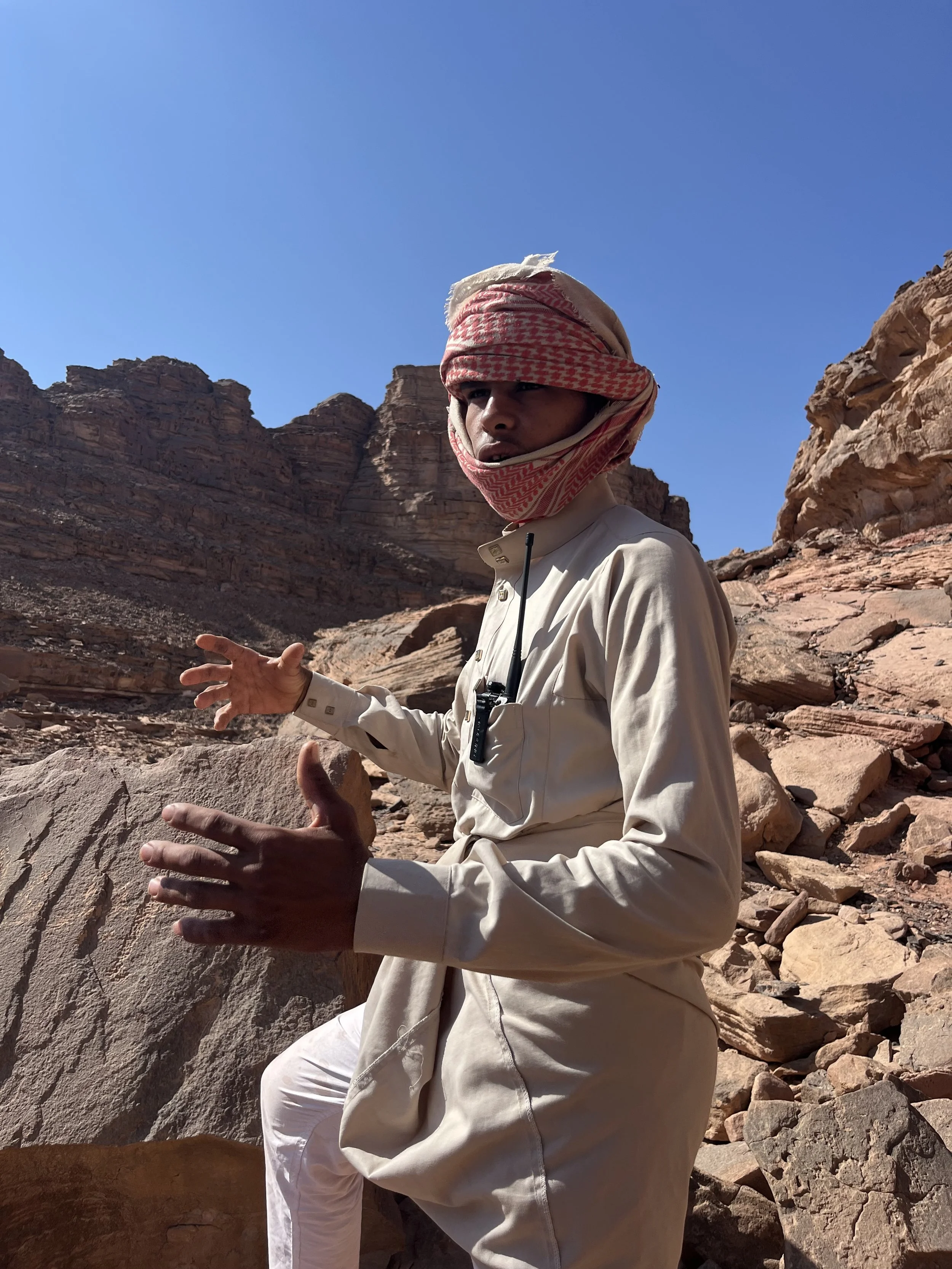
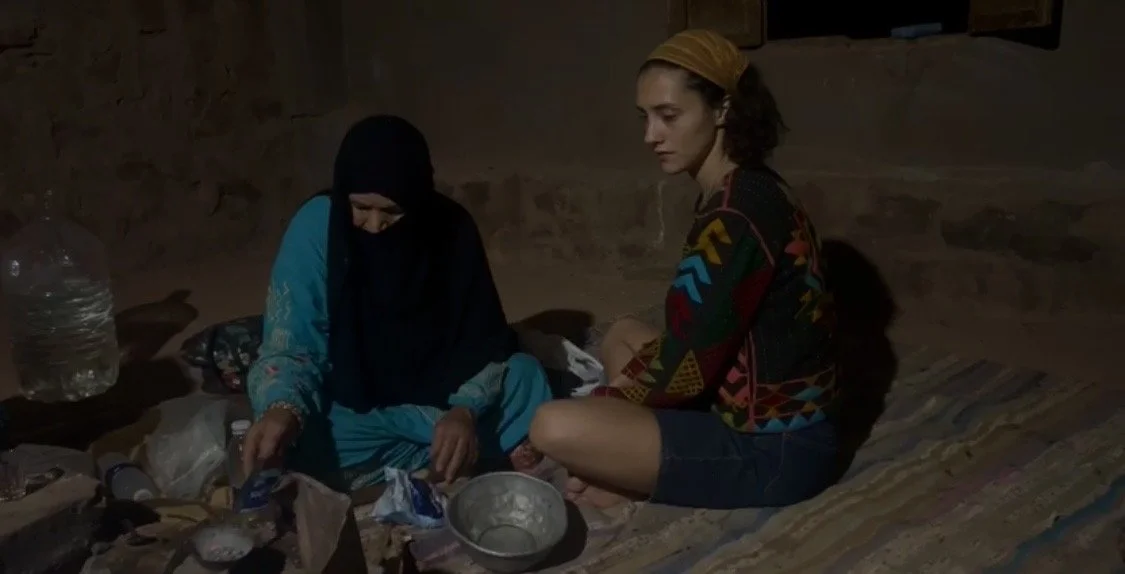
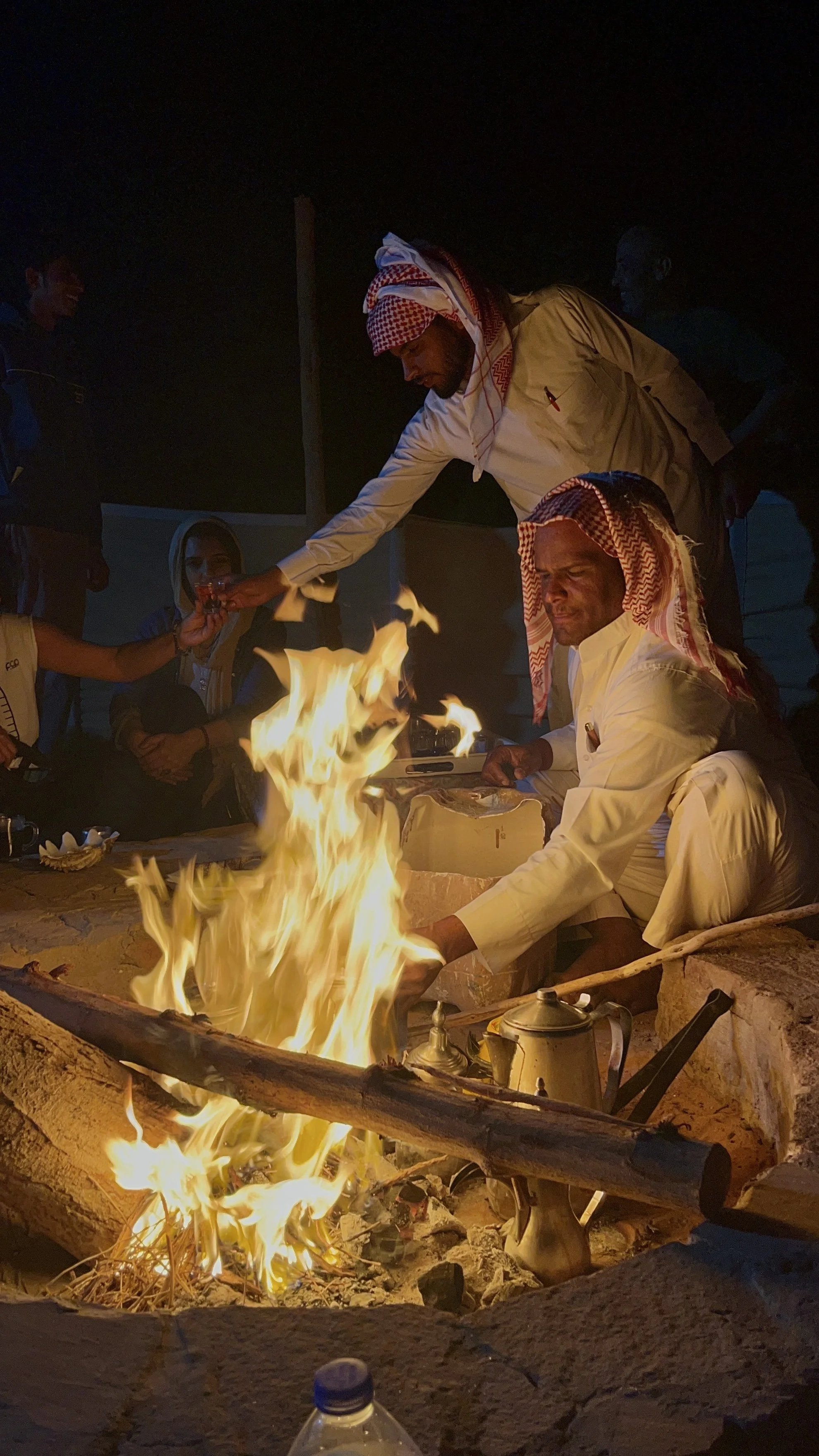
I researched ancient Egypt through a decolonial lens, staying with a Bedouin tribe in South Sinai. I learnt about their culture, history and practices.
There isn’t much ‘factual’ evidence on ancient Egypt, Kemet and whether Kemet actually means ‘black land’, as in land where people are black, or black as in fertile soil. The aim of this project wasn’t to uncover facts. I’m not an archaeologist or historian. It was to learn about the possibilities of our ancestral lineage.
I left this project not with answers, but with possibilities. The possibility of ‘what if’, and what that means for the diaspora.
Re-indigenising my practice
Ancient Egypt, Kemet and heritage
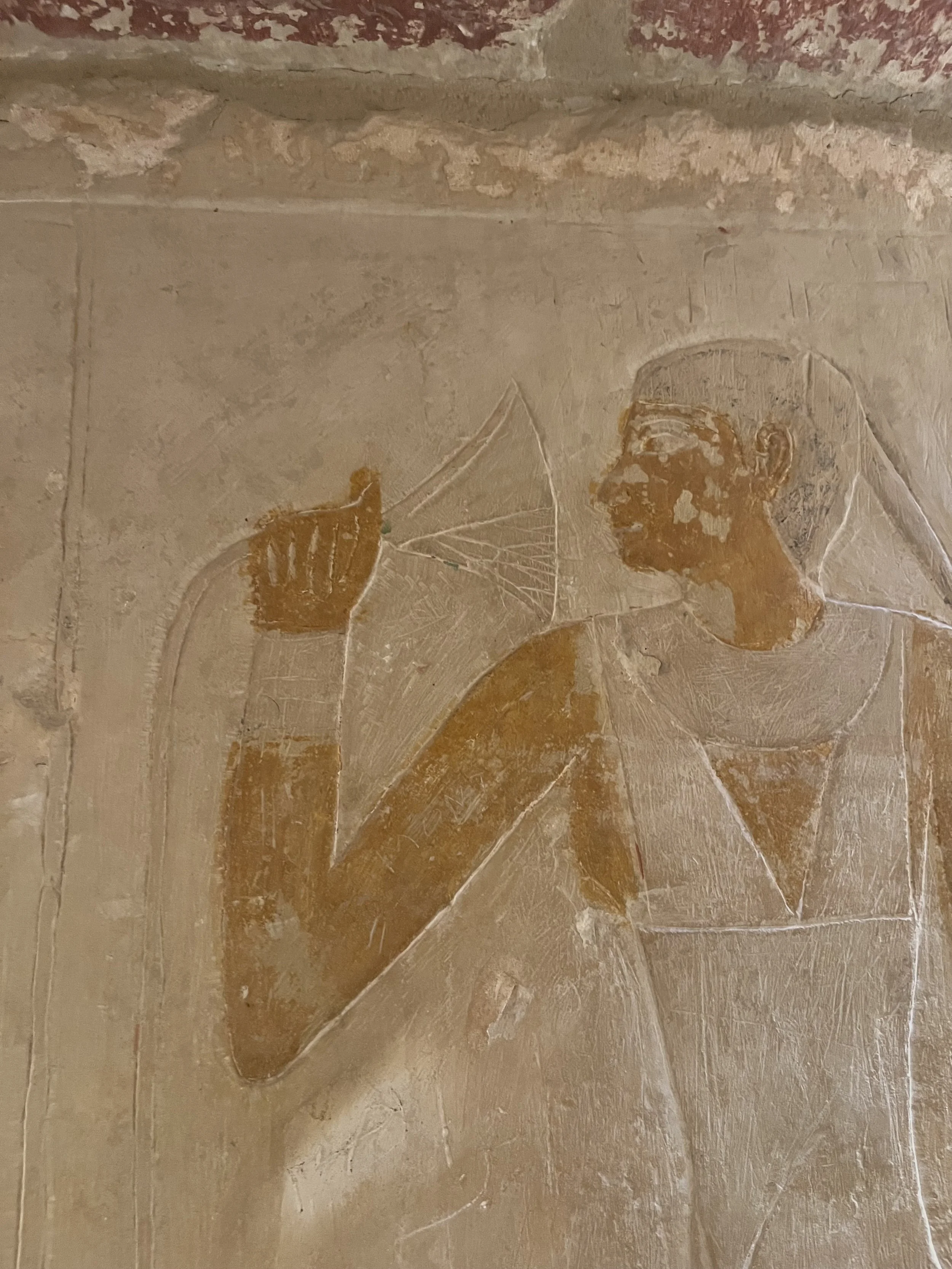
I visited Hathor Temple, the Giza pyramids and another pyramid, as well as Saqqara Pyramids.
Through meeting with locals, I discussed the Hawara Labyrinth , which is unearthed, Built during Egypt’s Middle Kingdom (12th Dynasty) as the mortuary complex of Pharaoh Amenemhat III, it is believed to have held sacred and state records and to have been a major centre for royal governance and decision-making: a massive complex later visited and famously described by the ancient Greek historian Herodotus in the 5th century BCE.
I also researched the defacing of statues and what that might mean. Were noses removed because the people depicted were Black, or was it part of a spiritual war? These Ideas were explored with Hala Shawky Elhefni, from Kemet tribe, who is a veteran archaeologist.
Ceremonies, spirituality and the afterlife
I researched ancient Egyptian ceremonies and took part in a blue lotus ceremony, which was believed to have been used in ancestral celebrations. Ancient Egyptians would visit temples, pray and celebrate life. Some believe they also took blue lotus to reach another realm and see their ancestors.
I researched Ma’at, the divine order and the way ancient Egyptians believed life should be lived. I also researched the afterlife and explored ancient affairs that have followed us through to the modern day.
In ancient Egyptian religion, there wasn't necessarily a concept of hell, but rather the possibility of non-existence.
The way the afterlife worked in ancient Egyptian religion was that a person's heart would be placed on one side of a scale, with a feather on the other. The heart had to be as light as the feather. If it wasn't, and carried darkness, the person would not be granted access to the afterlife. Some people were believed to have cast spells and buried themselves with them so they could lie during this process and make their way into the afterlife.
Hathor, womanhood and celebration
I researched ancient Egyptian celebrations and the importance of art, femininity and womanhood.
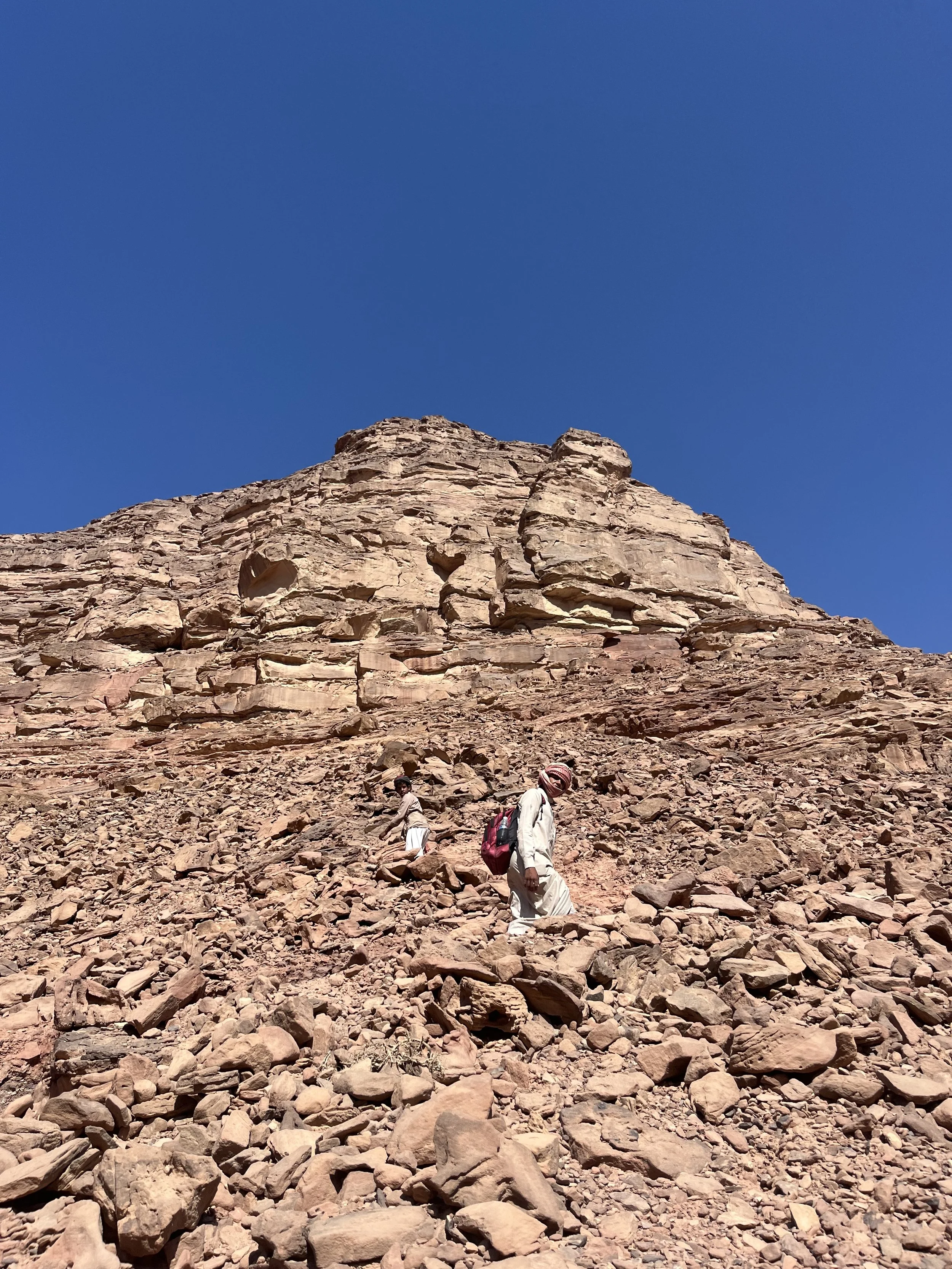
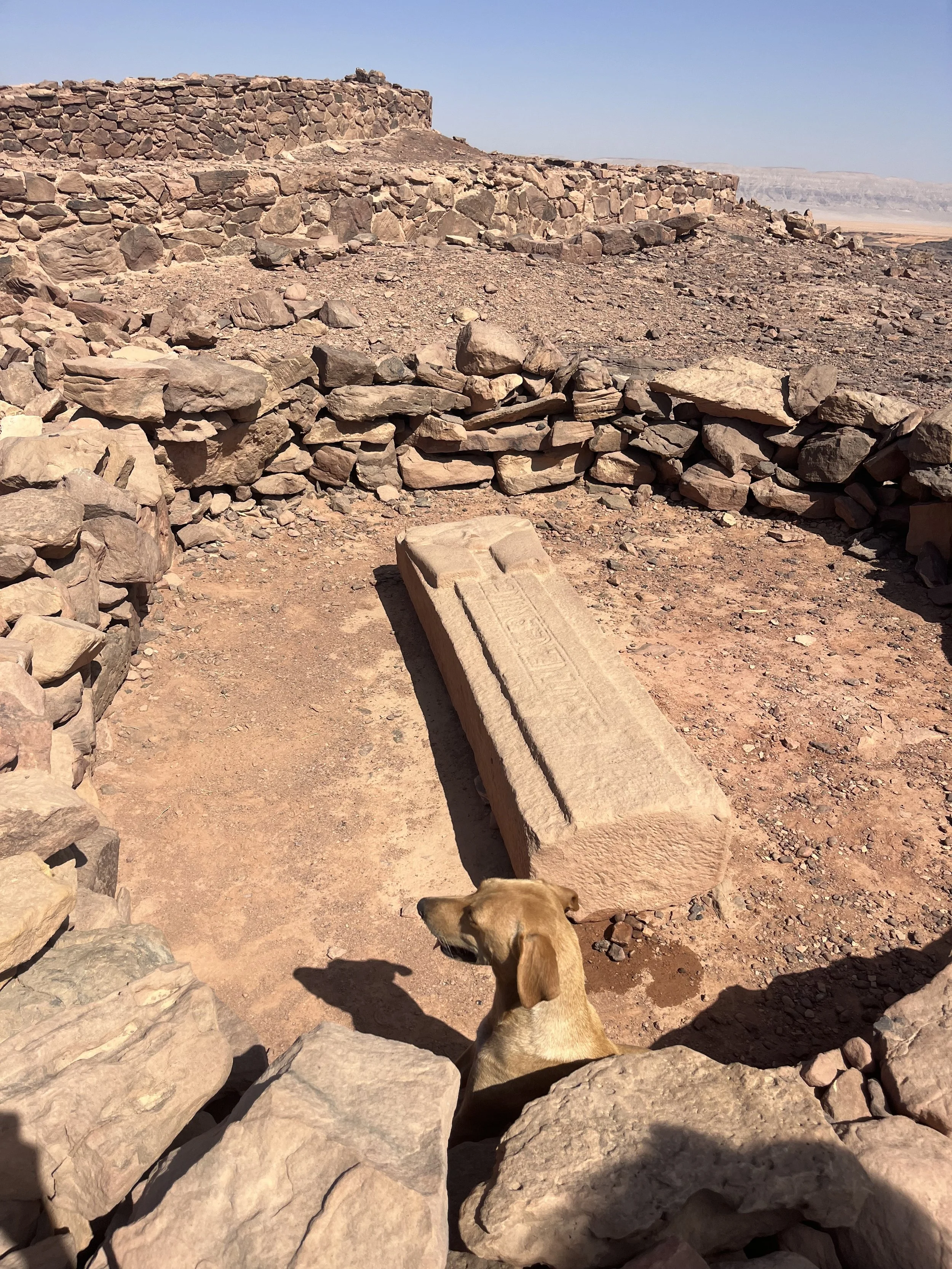
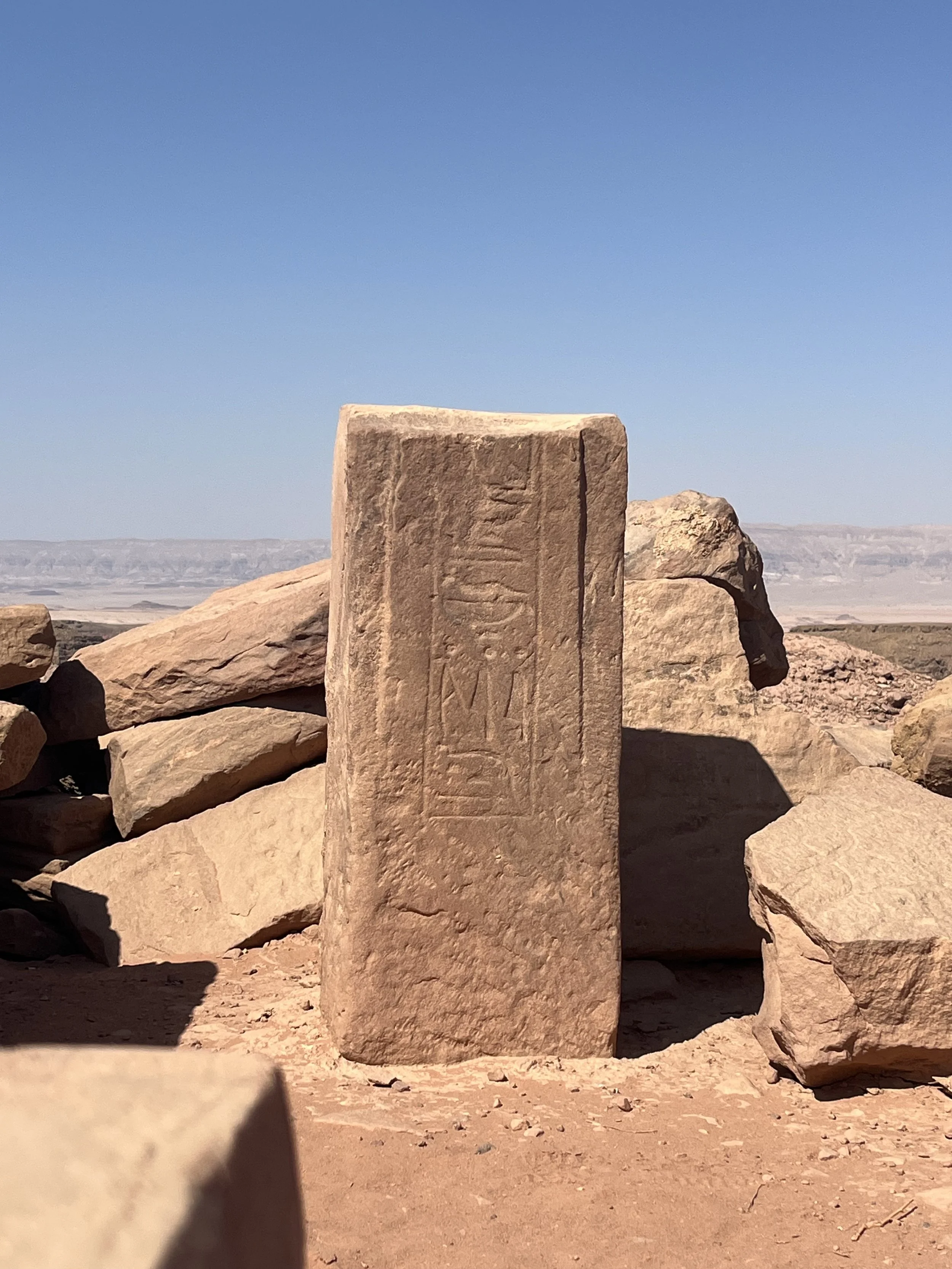
Hathor was an ancient Egyptian goddess associated with life, love, fertility, femininity and art. I visited her temple in Serabit, situated on top of a mountain in the middle of the desert. Only to be reached by a steep, rocky hike, was testament in itself to how important celebrations of womanhood and art were.
The ancient Egyptians had a passion for life and what it had to offer. I saw this reflected in Hathor Temple.
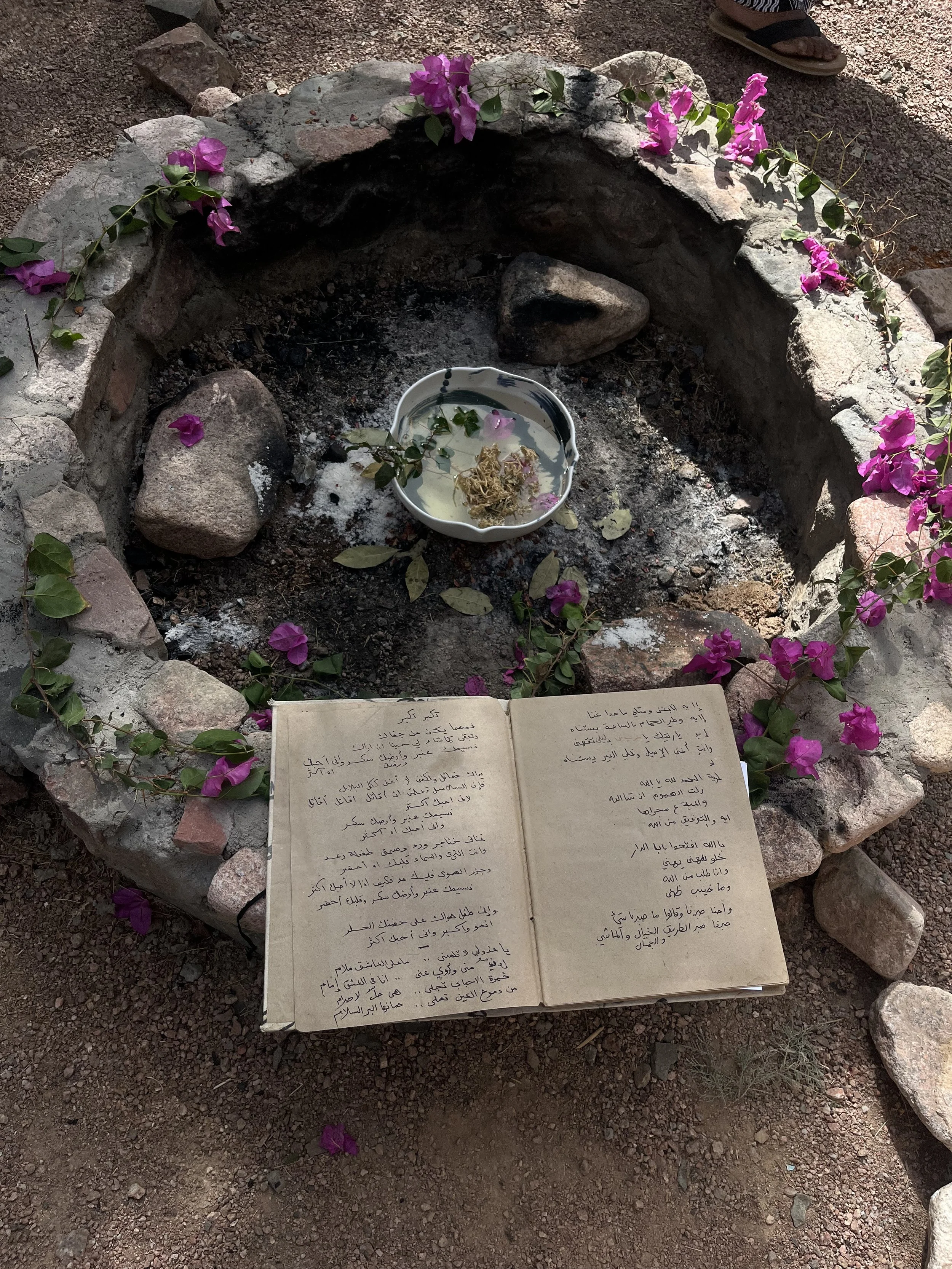
The Labyrinth as a symbol
I researched the labyrinth, as it is a key symbol across many ancient civilisations, as well as our psyche.
It represents life, going inwards, descending and ascending. It is a symbol that represents their entire belief system..